炉を解体し、本格的な補修に取りかかる。
最後に大きく補修したのは約1年前。
それからは傷んだところを継ぎ足し、継ぎ足しで何とか使い続けてきたが、さすがに限界。
粘土やモルタル、耐火物など、便利な材料を使いながら炉を造り直していくが、ふと考える。
今から1000年以上前の刀鍛冶たちは、どうやって炉を造り、修理していたのだろうか。
当時の製鉄や鍛錬の方法も気になるが、元となる炉の造りにも興味がある。考え始めると疑問が尽きない。
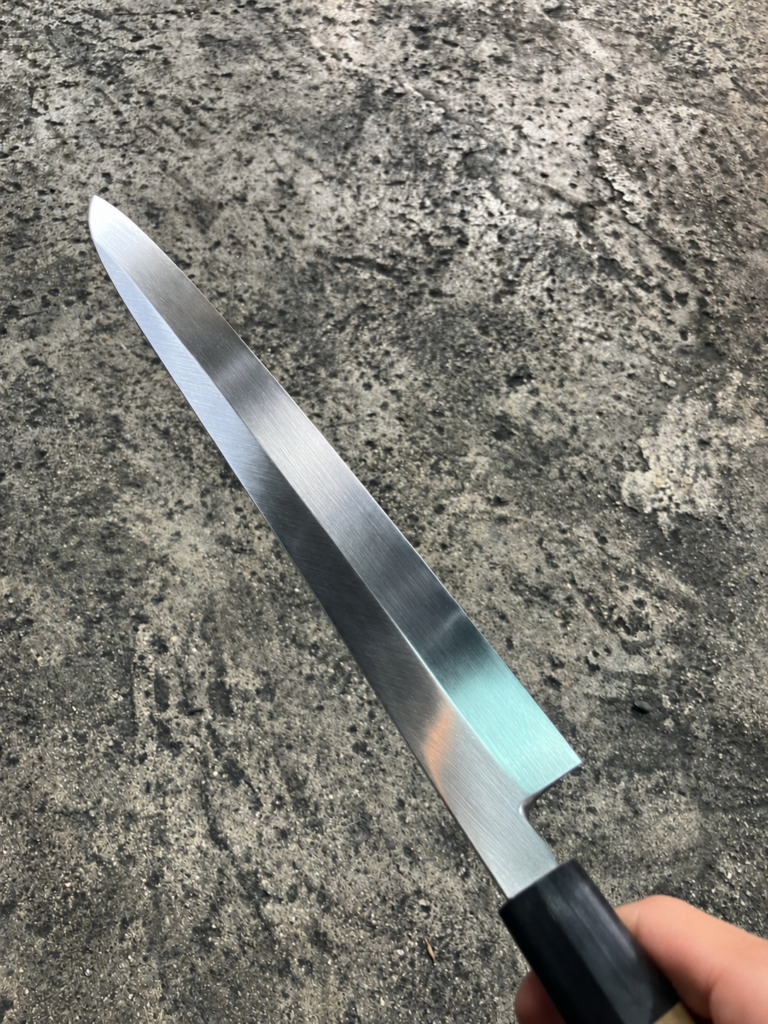
その後、研ぎに出していた柳刃包丁が戻ってきた。
今回は鏡面仕上げのため、研ぎの途中で疵が現れないか心配していたが、無事に無傷で仕上がった。
地鉄の表情は少し分かりにくいが、それでも玉鋼らしい肌がわずかに見える。
ひとまず安心した。
納品までもう少し。
お待たせしておりますが、もうしばらくお待ちくださいませ。
11/14
Today, I dismantled the forge and began some major repairs.
The last time I gave it a proper overhaul was about a year ago.
Since then, I’ve been patching it up little by little, trying to keep it going. But it had finally reached its limit.
I started rebuilding it using clay, mortar, and modern refractory materials.
As I worked, a thought crossed my mind.
How did swordsmiths build and repair their forges more than 1,000 years ago?
I’m fascinated by how they smelted and forged steel, but I’m just as curious about the furnaces and forges that made their work possible.
Without the convenient materials and tools we have today, what kinds of solutions did they come up with?
The more I think about it, the more questions I have.
Later, the yanagiba knife I had sent out for professional polishing arrived back at the workshop.
Since I requested a mirror finish, I’d been worried that flaws might appear in the steel during polishing.
Thankfully, it came back beautifully finished, with no visible flaws.
The mirror finish makes the steel’s natural character a little harder to see, but you can still make out some of the subtle grain unique to tamahagane.
That was a relief.
Just a little more work before delivery.
Thank you for your patience. Please bear with me a little longer.