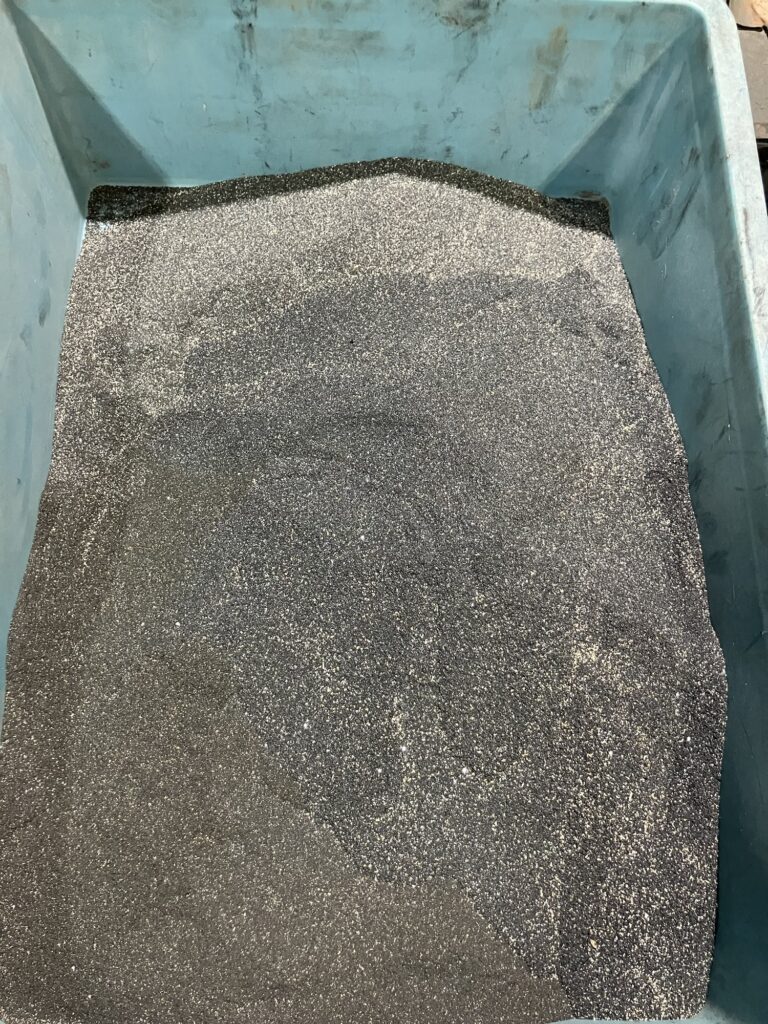
たたら製鉄の準備1日目。
まずは砂鉄を洗い、乾燥させてから選鉱。
前回と同じ3種類の砂鉄を混ぜ合わせる。
産地によって砂鉄の成分や性質は異なる。
それぞれの特徴を考えながら配合を調整できるのが、自家製鋼の面白いところだ。
近代製鉄では、鉄を完全に溶融させて不純物や炭素調整する。
だが、たたら製鉄では鉄を半溶解状で還元し、ノロとして不純物を分離していく。
還元状態を見極めることで、炭素量を調整した鋼を造る。
今回は牛刀の材料にする予定。
完成する地鉄を思い浮かべながら、砂鉄の段階から考えていく。
自分で砂鉄を選び、鋼を造り、その鋼で包丁を鍛える。
この一連の工程を自分の手でできることが、何より楽しい。
I started preparing for our next tatara smelt today.
First, I washed the iron sand, dried it, and sorted it.
This time, I’m blending the same three types of iron sand as in our previous smelt.
Iron sand from different regions has different compositions and characteristics.
One of the most interesting things about producing my own tamahagane is being able to adjust the blend depending on the kind of blade I want to make.
In modern steelmaking, molten metal is refined to remove impurities and adjust its composition.
Tatara smelting works differently.
Rather than fully melting the iron, it reduces iron sand into metal that remains largely solid, with some regions becoming partially molten. Impurities are separated into slag.
By understanding the composition of the iron sand and carefully managing the furnace temperature and reducing conditions, we can influence the carbon content and help separate impurities from the steel.
That’s why, for me, smelting begins with choosing the iron sand itself.
This batch is intended for a gyuto.
Even at this early stage, I’m already thinking about the finished knife and the kind of steel I want to produce.
Selecting the iron sand, smelting the steel, and then forging it into a knife with my own hands.
Being involved in every stage of that process is what I enjoy most.