まだ暗いうちに鍛冶場へ向かう。
気温は10℃を下回り、絶好のたたら日和。
5時より操炉を開始。
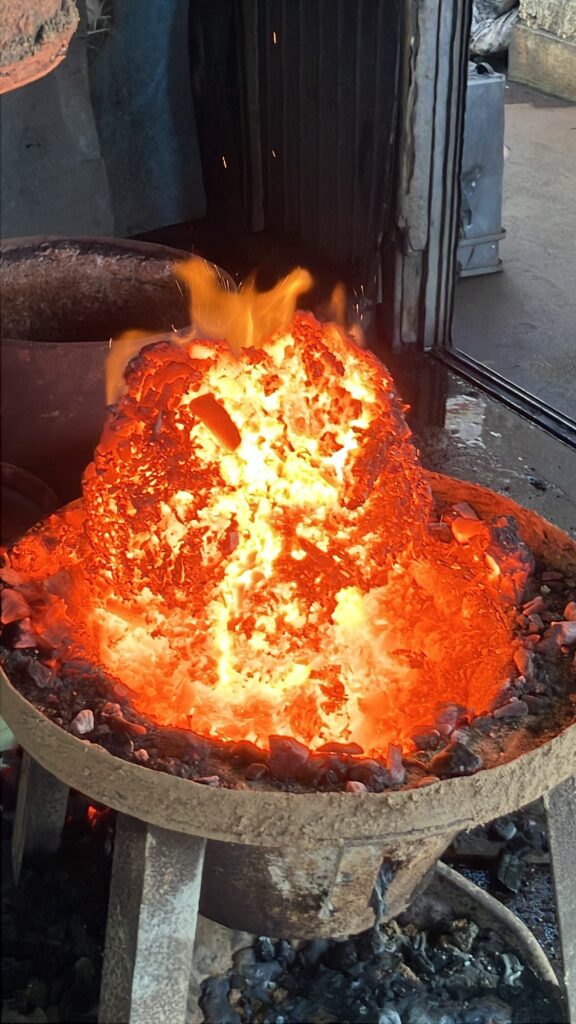
途中、ノロが出ず、鉧がうまく成長しているのか不安になるが、炉を開けてみると、そこには巨大な鉧が待っていた。
あれだけ心配していたのに、見事な鉧が出来上がっている。
本当にたたらは難しい。そして面白い。
ただ炭と砂鉄を入れていれば、玉鋼が出来るわけではない。
砂鉄の成分を分析し、融点や還元のしやすさを考えながら操業する。
私が目指す鋼は、一種類の砂鉄だけではなかなか得られない。
それぞれの砂鉄の特徴を活かすために数種類を混ぜ合わせるが、その分、炉の中で何が起きているのかを見極めるのも難しくなる。
思いどおりにいかないことばかりだが、仮説を立てて、次はこうしてみよう、あれを変えてみようと考える時間が楽しくて仕方がない。
目指すのは、折れず、曲がらず、よく斬れる刀。
自分で造った玉鋼をそんな一振に仕上げたい。
11/7
I headed to the forge while it was still dark outside.
The temperature had dropped below 10°C. Perfect weather for tatara smelting.
Today was finally smelting day.
Partway through the process, the slag wasn’t flowing as expected, and I began to worry that the steel bloom might not be growing properly.
But when we opened the furnace, a massive bloom was waiting inside.
After all that worrying, there it was.
Tatara smelting is incredibly difficult. And that’s exactly what makes it so fascinating.
Making tamahagane isn’t as simple as feeding charcoal and iron sand into a furnace.
I analyze the composition of the iron sand and consider its melting behavior and reduction characteristics when planning and operating the furnace.
The kind of steel I’m aiming for is difficult to achieve with just one type of iron sand.
By blending several varieties, I can take advantage of their different characteristics.
But that also makes the smelting process more complicated, and understanding what’s happening inside the furnace becomes even harder.
Things rarely go exactly as planned.
Yet I can’t help enjoying the process of thinking about what to change and what to try next.
To produce steel from iron sand with my own hands, and then forge that steel into a Japanese sword.
My goal is to create a blade that won’t break, won’t bend, and cuts exceptionally well.
Someday, I want to turn the tamahagane born today into a sword worthy of that ideal.